**Category:** VoIP
**Difficulty:** Beginner
## Learning Objectives
### After reading this article, you will be able to:
- Define what Voice over Internet Protocol (VoIP) is.
- Understand why organizations are replacing traditional telephone systems with VoIP.
- Explain the basic principles behind VoIP communication.
- Identify the key components of a VoIP system.
- Recognize the advantages and limitations of VoIP technology.
- Determine whether VoIP is suitable for your organization.
---
### In This Article
- What is VoIP?
- Why was VoIP developed?
- How does VoIP work?
- VoIP vs traditional telephone systems
- Main components of a VoIP system
- Benefits of VoIP
- Disadvantages of VoIP
- Common business use cases
- Frequently asked questions
---
## What is VoIP?
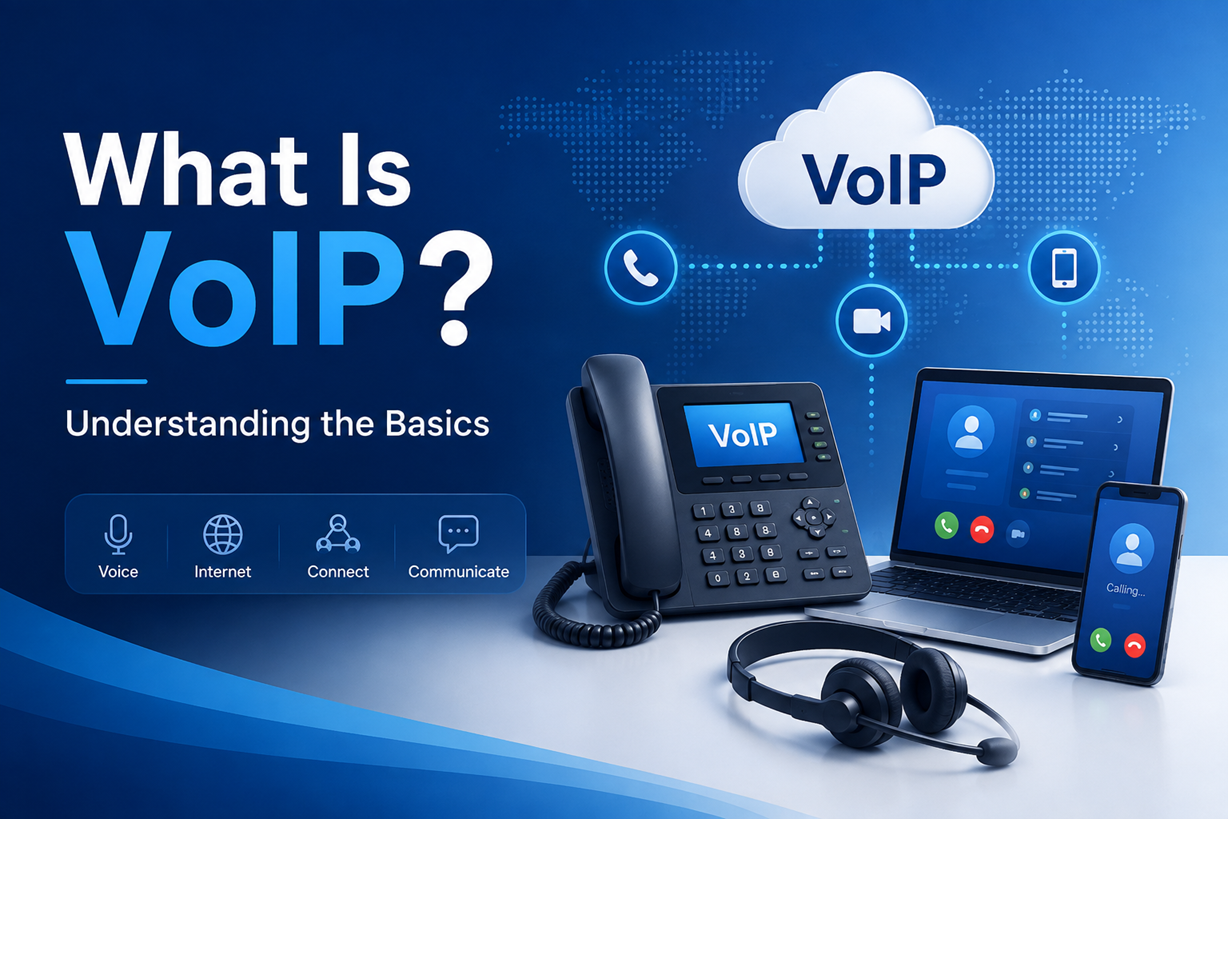
Voice over Internet Protocol (VoIP) is a technology that allows voice calls to be transmitted over IP networks instead of traditional telephone lines. Instead of sending analog signals through the Public Switched Telephone Network (PSTN), VoIP converts speech into digital data packets transmitted over a network.
Today, VoIP powers millions of business phone systems worldwide due to:
- Lower communication costs
- Greater flexibility
- Advanced features such as:
- Video conferencing
- Voicemail-to-email
- Mobile integration
- Unified communications
Whether you're calling from an office IP phone, a desktop application, or a smartphone,
VoIP enables you to communicate using your existing network infrastructure.
---
## Why Was VoIP Developed?
For many years, businesses relied on the Public Switched Telephone Network (PSTN) to
make phone calls. While reliable, traditional telephone systems have several
limitations:
- Requires dedicated telephone cabling
- Expensive long-distance calls
- Difficult scalability. Often requires new hardware and wiring.
- Limited remote work support
- Separate voice and data networks
As Internet connectivity became faster and more reliable, organizations began looking
for a way to transmit voice over their existing data networks. This led to the development
of Voice over Internet Protocol (VoIP), which allows businesses to use a single IP
network for both voice and data communication.
Today, VoIP has become the standard communication platform for many organizations
because it reduces costs, simplifies management, and supports modern workplace
requirements such as remote work and cloud-based collaboration.
---
## How Does VoIP Work?
### At a high level:
1. Voice is captured as an analog signal
2. Converted into digital data
3. Compressed using a codec
4. Split into packets
5. Transmitted over the network
6. Reassembled at the destination
7. Converted back to audio
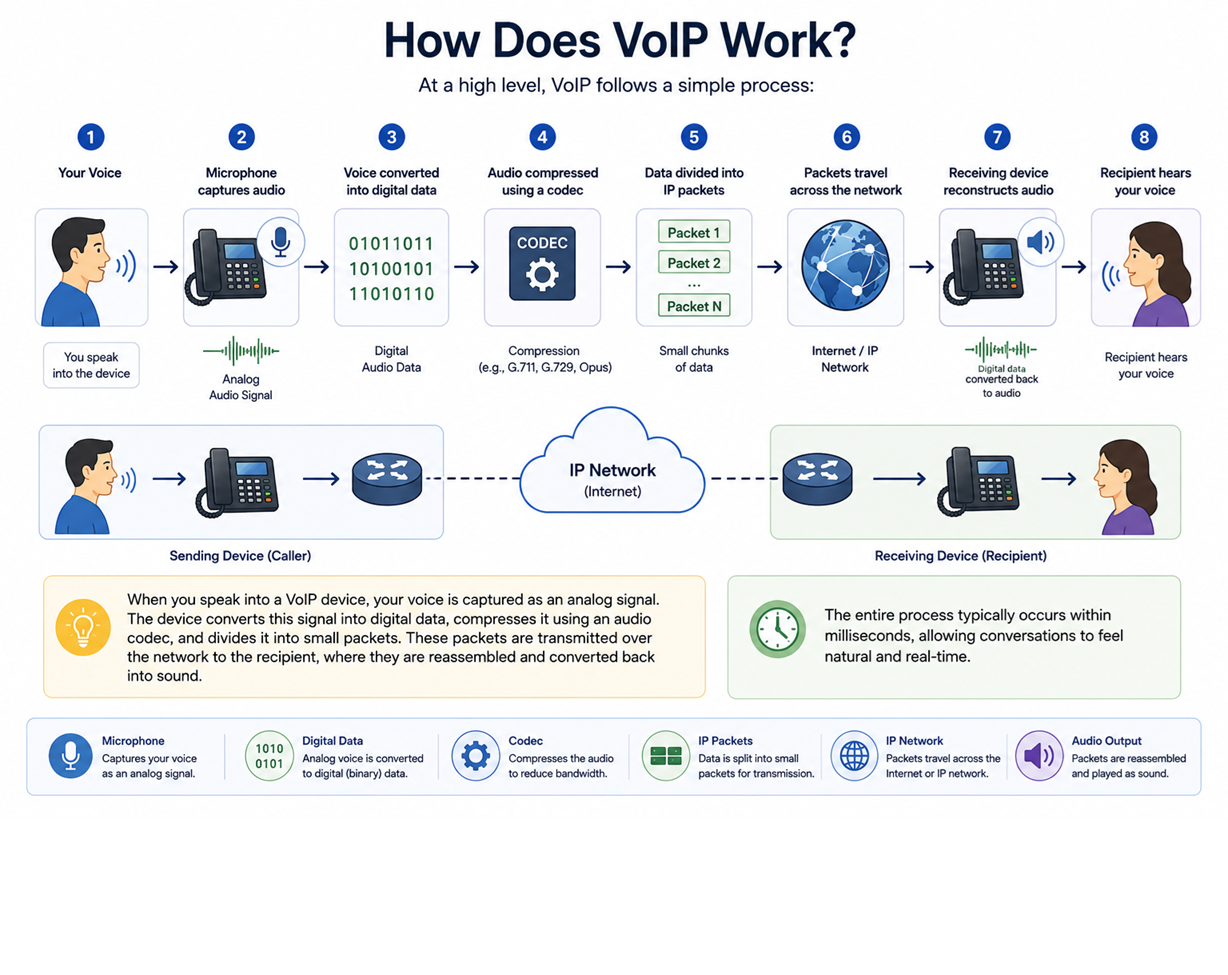
This process happens in milliseconds, enabling real-time communication.
*Note: Technologies such as SIP (Session Initiation Protocol) and RTP (Real-time Transport Protocol) make this communication possible. These protocols will be covered in the next article:* ***How VoIP Works: SIP, RTP & Media Flow***
---
## VoIP vs Traditional Telephone Systems
Although both technologies allow people to communicate by voice, they operate differently.
| Feature | Traditional (PSTN) | VoIP |
|--------|------------------|------|
| Transmission | Copper lines | IP network |
| Communication | Analog | Digital |
| Installation | Dedicated wiring | Existing network |
| Scalability | Limited | Highly scalable |
| Remote Work | Limited | Excellent |
| Video Calling | Not supported | Supported |
| Features | Minimal | Extensive |
| Cost | Higher | Lower |
Unlike traditional telephone systems, VoIP allows organizations to integrate voice communication with video conferencing, messaging, CRM platforms, and collaboration tools.
---
## Main Components of a VoIP System
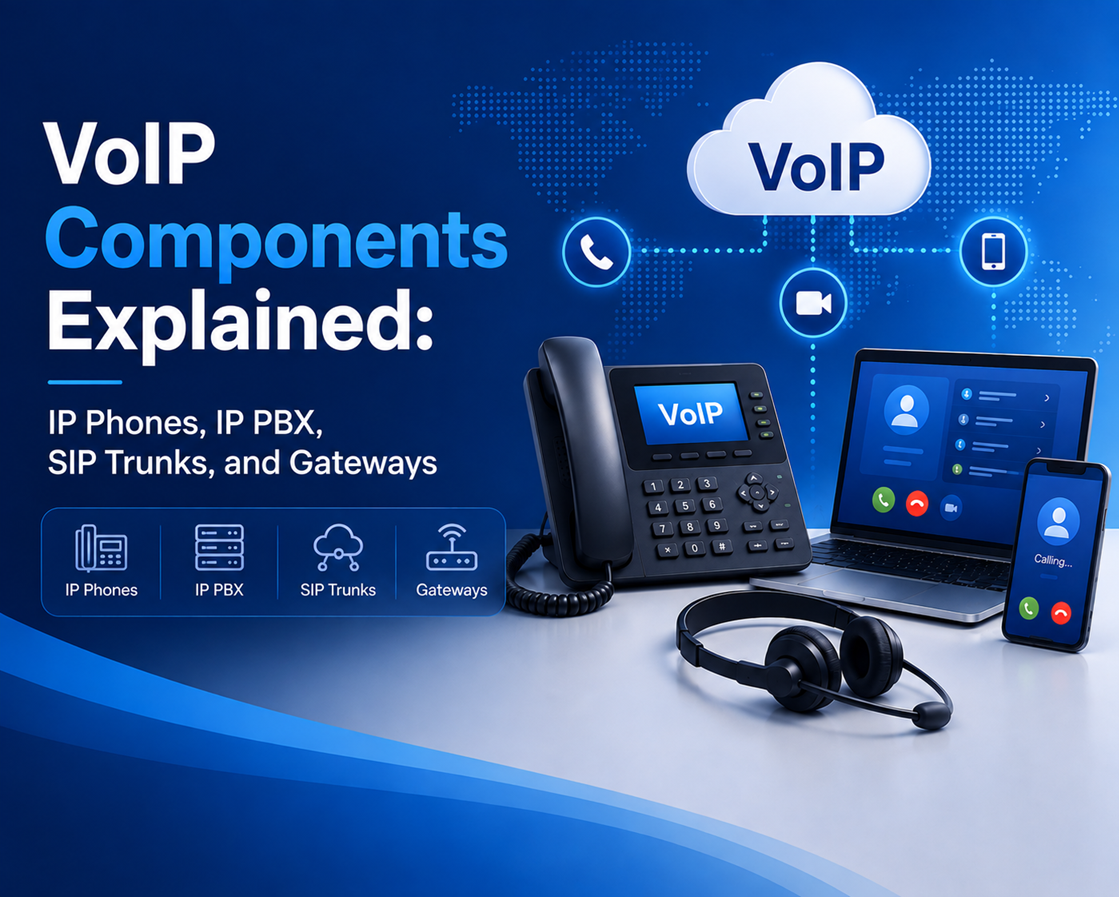
### 1. IP Phone
An IP Phone looks similar to a traditional desk phone but connects directly to the network using Ethernet or Wi-Fi.
- Features:
- HD voice
- PoE support
- Multiple SIP accounts
- Conference calling
IP phones are commonly used in offices, reception areas, and customer service departments.
### 2. Softphone
A Softphone is software that enables users to make and receive VoIP calls using a computer, tablet, or smartphone.
Examples:
- Bual Cloudphone
- Zoiper
- Linphone
- MicroSIP
- Bria
Softphones provide flexibility for remote employees and mobile workforces.
### 3. IP PBX
An IP PBX (Private Branch Exchange) is the central system that manages business telephone services.
Its responsibilities include:
- Managing extensions
- Routing incoming and outgoing calls
- Voicemail
- Auto attendants
- Call forwarding
- Ring groups
- Call recording
Popular platforms:
- Asterisk
- FreePBX
- 3CX
- FusionPBX
- PortaSwitch
### 4. SIP Trunk
A SIP Trunk connects the IP PBX to external telephone networks or VoIP service providers, allowing users to place and receive calls outside the organisation.
Instead of purchasing multiple physical telephone lines, businesses can use SIP trunks over their Internet connection
### 5. Network Infrastructure
Because VoIP depends on IP networking, the underlying infrastructure plays a critical role.
A typical VoIP network includes:
- Routers
- Switches
- Firewalls
- Internet connection
- QoS (Quality of Service)
A stable and well-designed network helps ensure consistent voice quality.
---
## Benefits of VoIP
Organizations adopt VoIP for many reasons beyond simply reducing costs.
### 1. Lower Communication Costs
- VoIP significantly reduces the cost of local, long-distance, and international calls by transmitting voice over IP networks instead of traditional telephone infrastructure.
### 2. Scalability
- Adding new employees is straightforward. In many cases, administrators only need to create a new extension and connect an IP phone, without installing additional telephone cabling.
### 3. Remote Work Support
- Employees can use their business phone numbers from virtually anywhere using laptops, smartphones, or IP phones connected to the Internet.
### 4. Advanced Business Features
Modern VoIP systems often include:
- Auto attendant
- Interactive Voice Response (IVR)
- Call recording
- Voicemail-to-email
- Call forwarding
- Presence status
- Video conferencing
- Instant messaging
Many of these features would require additional hardware or services in traditional phone systems.
### 5. Unified Communications
VoIP platforms can integrate with business applications such as:
- Microsoft Teams
- CRM systems
- Helpdesk tools
This enables employees to communicate more efficiently from a single platform.
---
## Disadvantages of VoIP
While VoIP offers many benefits, organizations should also consider its limitations.
### 1. Internet Dependency
- VoIP relies on network connectivity. If the Internet connection fails, voice services may be interrupted unless backup connectivity is available.
### 2. Power Dependency
- Unlike traditional analog telephones that may continue operating during power outages, most VoIP devices require electrical power or Power over Ethernet (PoE)
- Organizations often deploy Uninterruptible Power Supplies (UPS) to maintain service during power interruptions.
### 3. Network Quality Issues
- Voice traffic is sensitive to network conditions.
- Poor network performance can lead to:
- Latency
- Packet loss
- Jitter
- Poor audio
Implementing Quality of Service (QoS) helps prioritize voice traffic and improve call quality.
### 4. Security Risks
Like any IP-based service, VoIP can be targeted by cyber threats such as:
- SIP registration attacks
- Toll fraud
- DoS attacks
- Eavesdropping
Organizations should implement firewalls, encryption, strong authentication, and regular security updates to protect their VoIP infrastructure.
---
## Common Business Use Cases
VoIP is used across a wide range of industries.
**1. Small Businesses**
- Affordable communication with enterprise-grade features such as auto attendants and voicemail.
**2. Multi-Branch Enterprises**
- Centralized communication across multiple offices using a single IP PBX or cloud platform.
**3. Contact Centers**
- Supports intelligent call routing, queue management, and call recording for customer service teams.
**4. Healthcare**
- Enables efficient internal communication, appointment management, and telehealth services.
**5. Education**
- Supports campus communication, distance learning, and administrative collaboration.
**6. Hospitality**
- Provides guest room telephony, front desk communication, and internal staff coordination.
---
## Is VoIP Right for Your Organization?
VoIP is a strong choice for organizations that:
- Have a reliable Internet connection.
- Want to reduce communication costs.
- Support remote or hybrid work.
- Need advanced communication features.
- Plan to scale without significant infrastructure investment.
For most modern businesses, VoIP provides greater flexibility and long-term value than traditional telephone systems.
---
## Key Takeaways
- VoIP transmits voice over IP networks instead of traditional telephone lines.
- It converts analog speech into digital packets for transmission.
- Organizations benefit from lower costs, improved scalability, and modern communication features.
- A typical VoIP deployment includes IP phones, an IP PBX, SIP trunks, and a reliable network infrastructure.
- Proper network design and security practices are essential for delivering high-quality VoIP services.
## Frequently Asked Questions
**1. Is VoIP the same as Wi-Fi calling?**
No. While both use IP networks, VoIP refers to Internet-based voice communication in general, whereas Wi-Fi Calling is a feature provided by mobile carriers that routes cellular calls over a Wi-Fi connection.
**2. Does VoIP require Internet?**
Yes. VoIP depends on an IP network, such as a local area network (LAN) or the Internet, to transmit voice traffic.
**3. Can I keep my number?**
In most cases, yes. Many VoIP providers support number porting, allowing businesses to retain their existing telephone numbers when migrating to VoIP. If not, users can keep their current analog telephony system with the existing number and use a VoIP gateway to convert it to VoIP.
**4. Is VoIP suitable for small businesses?**
Yes. VoIP offers enterprise-grade features at a lower cost, making it an attractive solution for startups and small businesses.
**5. Is VoIP secure?**
VoIP can be highly secure when deployed with encryption, strong authentication, properly configured firewalls, and regular software updates.
# Continue Learning
This article introduced the fundamentals of Voice over Internet Protocol. To build on this knowledge, continue with the next article.
**Next Article:** [ ***How VoIP Works: SIP, RTP & Media Flow*** ](https://bual.asia/blog/how-voip-works-sip-rtp-media-flow)
You will learn:
- What SIP is and how it establishes calls.
- How RTP carries voice traffic.
- The role of codecs in voice quality.
- NAT traversal techniques.
- A complete end-to-end VoIP call flow.
Article 1: What Is VoIP? Understanding the Basics
VoIP (Voice over Internet Protocol) enables voice communication over IP networks instead of traditional telephone lines. Learn how VoIP works, its key components, benefits, limitations, and why it has become a flexible communication solution for modern businesses.